LED displays are transforming modern retail environments by integrating digital communication with architectural design. Explore how Ledtime applies different LED technologies through its Nike, GIZIA, and Blue Diamond projects.
In modern retail design, LED displays have evolved beyond conventional advertising screens into essential elements of architectural environments. Indoor LED displays provide high pixel density and large digital surfaces, while Flexible LED technology adapts to curved and custom-shaped structures. Transparent LED displays offer solutions for storefronts where light transmission and visibility are important. Selecting the appropriate technology requires evaluating pixel pitch, viewing distance, ambient lighting, screen dimensions, and content resolution. Technical considerations such as cabinet depth, structural support, power distribution, thermal management, and maintenance accessibility also play a critical role in successful architectural LED integration.
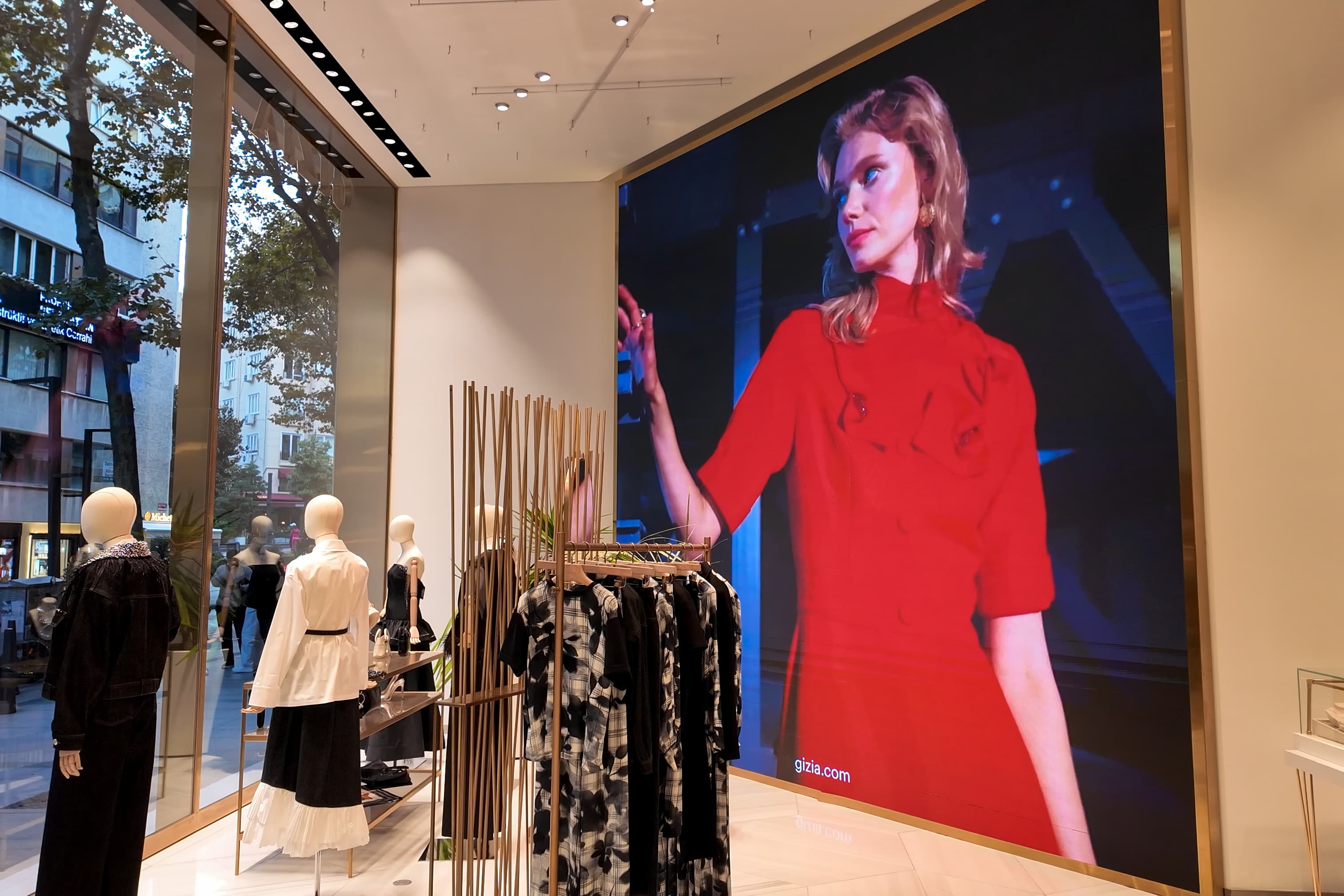
Ledtime Engineering's completed projects demonstrate how these technologies can be adapted to different retail environments. At Nike İstinyePark, a P4 Flexible LED display with a circular structure measuring 138 cm in diameter demonstrates the possibilities of custom-shaped installations. The GIZIA Nişantaşı project features a 23 m² P2.5 indoor LED display, providing a large-format digital surface. The Nike Istanbul Airport P3.9 transparent LED installation highlights the use of see-through display technology in retail architecture, while the Blue Diamond Mecidiyeköy P2.5 outdoor LED project features an L-shaped configuration designed for corner integration. Together, these applications demonstrate how architectural LED display solutions combine visual performance, spatial integration, engineering planning, and appropriate product selection.